Die with Zero
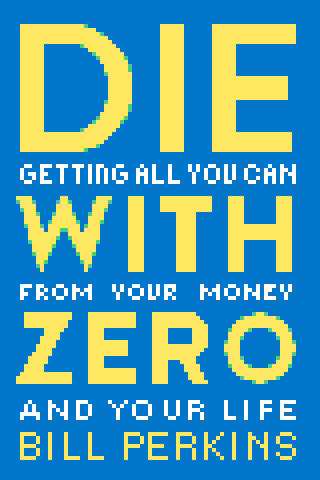
I admit that I wanted to really hate on this book when I read the title. Written by a multi-millionaire gambler, but recommended by a friend. At least it is short.
The book is tone deaf but gives solid advice.
In one paragraph:
Delaying gratification forever results in unsatisfying life. Money serves best when used at the opportune time, and once you are six feet under it is worthless. Your kids would be better served having the funds much earlier.
My favourite quote (paraphrasing):
The only thing you can do on your deathbed is to reminisce over experiences you had.
Takeaways
On average, children inherit money at age 62. Getting a boost when retired is useful, but having it earlier would be life-changing. You should start dishing inheritance when your kids are about 26—so they are old enough to not gample it away—and give them all the money you planned to by the age of 35—so they can benefit from it.
Make a plan of all experiences you want to have, and figure out the ideal age to enjoy them.1 This is the same idea as in outlive Outlive, except instead of planning your lifestyle to be able to do them, you plan your spending so you do not feel bad paying for them.
I would add to plan the activities you want to do with your kids. I loved Legos as a kid and I am hoping mine will want to play with them too; which means that by the time she is 8 years old I will need to be able to sit on the floor for an extended period of time. This is already uncomfortable today! I guess I’ll Slav-squat. Hiking when she is able and (hopefully) willing will be a challenge.
If your dream is spending six months on a cargo ship doing nothing, do it before you have responsibilities, even if you would have to spend all of your savings to do it. Plan ahead and aim to die with the least amount of unused capital.
Criticism
To the author’s credit he admits that his book is useless unless you have sufficient disposable income. Later we find that this means a substantial wealth. Towards the end Perkins wants to illustrate that you do not need much money to survive once you retire, this is to advocate for not saving too much. Then he proceed to do maths: to get a bit over $12k per year for about 25 years you need to save more than $200k2. Earlier though, he cites a study claiming that a median 62 years old American has somewhere between 100 to 200 thousand dollars of net worth. Surviving on $12k per year is arduous. Most will not have even as much.
I definitely do not want to meet the people who spend “thousands of dollars per month on Starbucks”, to whom Perkins suggest that their money would be better spent buying a plane ticket to a nice destination.
Health risks are ignored.
- For minor problems “there is insurance”, assuming you can either pay premiums or live in a country that bans insurance profiling.
- For severe issues “you wouldn’t be able to pay for it anyway” so the authors advices to just die.
Author poses an axiom: “you will always earn more money later in your life, so saving early makes no sense”. For americans this has been historcally accurate. In the past few decades wages have been stagnating, at best, for all but the top few percent. With AI, the pool of well paid, accessible3 jobs is shrinking. Oh, and we are also in the largest spending bubble yet4.
Perkins is also cavalier with relationships with friends and family. Abandoning your friends and family to move across co the country is a fine idea if the pay rise is larger than a couple of first-class tickets: “you don’t see your friends that often anyway”. This completely disregards the importance of close proximity for spontaneous interaction. When living far from people you will always have to plan all meetings, which will downgrade your friendships to acquantances. This attitude is unsurprising from an individualist.
Conclusion
Do not let your life just pass by, and wonder where it went. Figure out the experiences you want to live, determine the best time for each and prepare to spend money when the time comes.
-
The examples Perkins gives are typical rich-person hobbies like lavish parties and extreme sports. However it applies to freebies as well: you can only run a marathon if you prepared for it while you were still able. ↩︎
-
This is because we still count that your savings are earning you an interest above the inflation rate. ↩︎
-
Through skill, not nepotism. ↩︎
-
Much larger than the DotCom and the Subprime. When this one burst there will be blood. ↩︎